Quick Summary
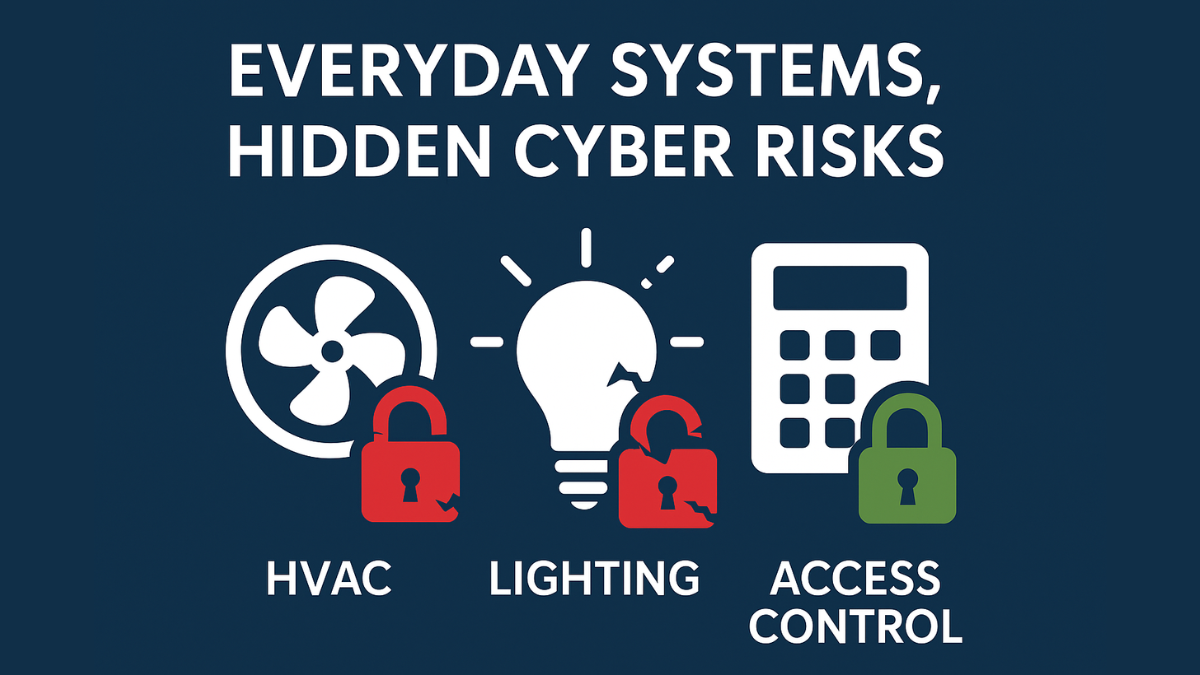
HVAC, lighting, and access control systems may appear harmless but can be exploited to cause serious operational, financial, and safety issues. These “hidden” risks arise from insecure protocols, lack of authentication, and poor segmentation. By adopting Zero Trust principles and device-level protection, facility managers and building operators can turn vulnerable systems into secure components of a resilient smart building.
Introduction
When people think about cybersecurity, they often picture firewalls, data centers, or stolen financial records. What usually doesn’t come to mind is a thermostat, a light switch, or a badge reader. Yet these everyday building systems, HVAC, lighting, and access control, have quietly become gateways for cybercriminals. As building automation systems (BAS) connect to the internet for remote management and efficiency, attackers increasingly see them as opportunities to disrupt operations, steal data, or gain unauthorized physical access.
This article explores the hidden cyber risks in these common systems, why facility managers and building operators must pay attention, and how Zero Trust principles can help secure them.
HVAC: Comfort Systems With Hidden Vulnerabilities
HVAC systems are critical for occupant comfort, but their controllers and sensors are also potential attack vectors. Most building HVAC controllers communicate via protocols like BACnet, which were designed decades ago without security features like authentication or encryption. Some cyber risks include:
- Downtime: An attacker who gains access could shut down heating or cooling in hospitals, offices, or schools, causing immediate disruption.
- Energy Waste: Malicious manipulation of setpoints or schedules can lead to skyrocketing energy bills.
- Malware Insertion: Compromised HVAC controllers can serve as an entry point into the broader building network, providing attackers a foothold inside.
Smart Lighting: Convenience vs. Cyber Exposure
Smart lighting systems improve efficiency, reduce costs, and provide customizable occupant experiences. But with connectivity comes risk:
- Network Access: Many lighting systems are IP-enabled, making them accessible remotely if not properly segmented.
- Manipulation: Attackers could disable lighting in critical areas such as stairwells, labs, or parking garages, creating safety hazards.
- Botnets: Lighting devices are often low-resource IoT nodes, making them prime targets for being hijacked into botnets for distributed denial-of-service (DDoS) attacks.
The very features that make smart lighting appealing, centralized control and automation, also expand the attack surface.
Access Control: Security at the Door, Vulnerability in the Network
Access control systems are meant to safeguard physical security, but they too are vulnerable. Risks include:
- Badge Reader Exploits: Many still use weak or default credentials, allowing attackers to spoof access rights.
- Denial of Entry/Exit: Cyberattacks could lock or unlock doors across a facility, disrupting operations or enabling intrusions.
- Data Leakage: Logs of employee movements stored within access systems could be exfiltrated, creating privacy risks.
Ironically, systems designed to protect a building physically can be weakened if they are not secured digitally.
Why These Risks Are “Hidden”
Unlike a corporate server breach, which immediately grabs headlines, BAS cyber incidents often fly under the radar. Facility managers might attribute an HVAC shutdown to equipment failure or dismiss lighting outages as glitches. Yet these can be symptoms of underlying cyber exploitation.
This lack of visibility makes BAS an attractive target for attackers. They know these systems are critical to day-to-day operations but rarely monitored with the same rigor as IT assets.
Building a Defense Strategy
To defend against these risks, facility managers need to rethink how BAS systems are secured. Key steps include:
- Device-Level Authentication: Ensure every HVAC controller, lighting node, and badge reader is authenticated.
- Encryption of Communications: Prevent attackers from intercepting or injecting malicious commands.
- Segmentation and Access Controls: Separate BAS networks from corporate IT and enforce role-based permissions.
- Zero Trust Principles: Eliminate implicit trust inside the network — every device, every request must be verified.
- Future-Proofing with Post-Quantum Cryptography: With quantum computing on the horizon, securing BAS devices with quantum-resistant encryption is critical for long-term resilience.
Solutions like Veridify’s DOME™ platform provide these protections at the device level, securing existing BAS devices without network changes or hardware replacements.
Conclusion
HVAC, lighting, and access control may look like routine building systems, but they’re now front-line targets for attackers. These hidden risks can lead to operational downtime, safety hazards, energy waste, and unauthorized access — all while serving as stepping stones into corporate IT networks.
Facility managers and building owners must recognize that cybersecurity doesn’t stop at the data center. It extends to every device, every endpoint, and every system in the building. By adopting Zero Trust principles and future-proof solutions, operators can expose and eliminate these hidden cyber risks before attackers exploit them.
Key Takeaways
- HVAC vulnerabilities include downtime, energy waste, and malware insertion via unsecured protocols like BACnet.
- Smart lighting risks include remote manipulation, botnet exploitation, and safety hazards in critical areas.
- Access control systems can be hacked to spoof credentials, lock/unlock doors, or exfiltrate movement data.
- BAS risks can be misdiagnosed as glitches, giving attackers a hidden advantage.
- Zero Trust and device-level security ensure that every system is authenticated, encrypted, and resilient.
- DOME™ by Veridify Security enables protection of legacy and modern BAS devices without replacing infrastructure.